

Background and inspiration
What first drew you to the world of textile design?
I’ve always been drawn to colour, pattern and the way it can completely transform how something feels. Throughout my art, these elements naturally became the focus of everything I created, so textile design felt like the perfect path. I have always loved the idea that my designs could exist within a part of everyday life, whether through fashion, interiors or lifestyle products.
Who or what are your biggest creative influences, and how do they show up in your work?
My biggest creative influences come from both fine art and textile design. I’ve always admired Matisse, Kandinsky and Hockney for their expressive use of colour and shape, and the way they tell stories through design. I’m also inspired by heritage brands such as Sanderson and Liberty, alongside contemporary studios like Mind the Gap, whose bold use of colour, pattern and storytelling continues to influence my own work. These inspirations encourage me to create designs that celebrate colour, nostalgia and narrative.
At what point did you realise your design style had started to feel like your own?
I realised my design style had become my own when I stopped separating drawing and colour and instead allowed them to work together. Combining detailed hand-drawn illustrations with layered screen printing helped me develop a style that felt authentic and original, showcasing my love of storytelling within.
The Award-winning work
Can you tell us about the inspiration and concept behind your award-winning collection?
“Treasure the Thoughts” is my Final Major Project, which aims to preserve and reawaken nostalgia of 1970s and 80s homes. The project captures the warmth and familiarity of these decades. Taking inspiration from domestic objects and retro items, transforming them into maximalist textiles that evoke memories of the era itself, helping viewers to reconnect with the atmosphere of the past. Each colour within the collection has its own name and meaning, referencing a time, place or moment that means something to each one of us, enabling storytelling through pattern and colour.
Every design is hand screen printed, emphasising craftsmanship and the quality of bespoke work, using my technical drawing as a base to develop imagery in an organic and individual way. This project celebrates memory, and the emotional connection we have to the spaces we once called home — creating a modern maximalist collection that can be enjoyed by all, bringing back the vibrancy and happiness of the past.

[IMAGE: Treasure the Thoughts collection — fabric lengths] Part of the Treasure the Thoughts collection. Photography: Denisa Ilie / Retouching: Hannah Gadd
How did your ideas evolve from the initial concept and sketches through to the final collection?
As my collection is inspired by my grandmother’s house, regular visits and conversations with both her and my dad allowed memories, emotions and stories to come alive within the final collection. From lots of sketches and drawings, I developed over 50 designs, each capturing a different moment or feeling that ended up forming the final ones. Throughout the process, memory and emotion remained at the heart of every design.
Is there one design or print from the collection that you’re particularly proud of, and what makes it special to you?
Domestic Maximalism is one of the designs within the collection that I am most proud of. The print is composed of hand-drawn domestic objects collected from my grandma’s home, including things such as a vintage telephone, radio, clock, armchair, and lampshade. Traditionally screen printed by hand, these familiar items are brought together to form a playful domestic collage that reflects her love of collecting and preserving the objects that hold personal meaning. This print is a true summary of the whole collection and presents my work perfectly.

[IMAGE: Domestic Maximalism print]
Design process
Could you walk us through your design process, from initial research and development to the finished print?
My process always begins with research, whether that’s visiting inspiring places, taking photographs, collecting objects or recording conversations and memories. I then develop these ideas through observational drawing before refining the strongest motifs into repeat patterns. This is done through both physical and digital development. From there, I add in the colours, and tweak the composition and scale. Every stage is driven by storytelling, ensuring each print has both a strong visual impact and a meaningful narrative.
Which stage of the process do you enjoy the most — and which do you find the most challenging?
My favourite stage is the hand screen printing process. Seeing each layer of colour gradually build the final design is so rewarding — even though it’s a time-consuming process, the hand-crafted nature of it makes it even more special. Personally, I find the most challenging part is choosing which colours appear within each design. I love experimenting with colour, and because my designs often work well in many different combinations, narrowing them down to the final palette can be surprisingly difficult.
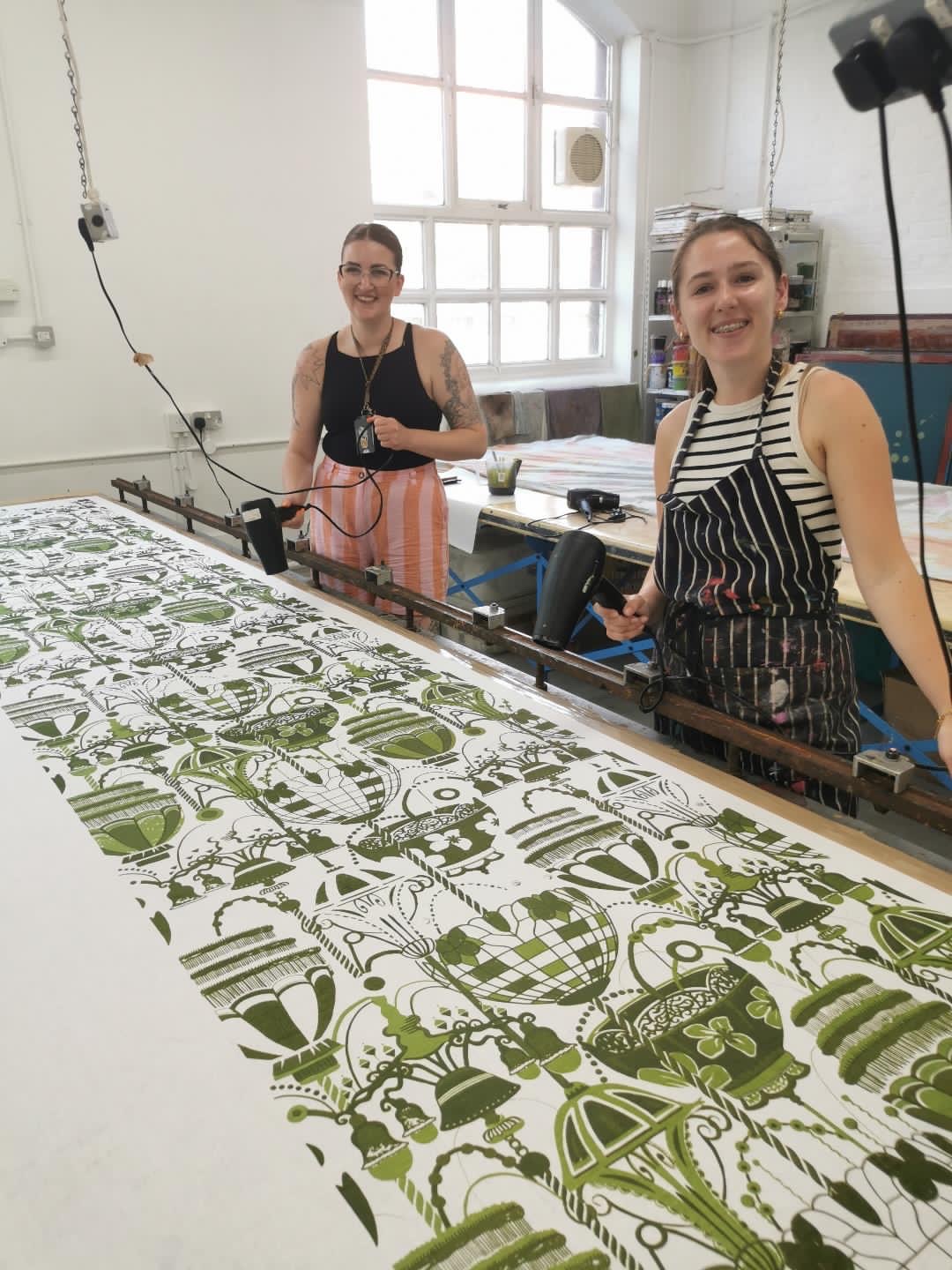
[IMAGE: Jessica and university technician Yasmine Carpenter with a finished length] [IMAGE: Forgotten Floral print, mid-production]
Colour is such an important element of textile design. How did you develop the colour palette for this collection, and what were you hoping to communicate through it?
Colour is at the heart of my collection. Every colour is individually named and inspired by a personal memory or story connected to my grandmother’s home. I mixed over 50 colours and refined them to those that best reflected the emotions and narratives of the project. By giving each colour its own meaning, the story remained in every print, whether the design was highly detailed or more abstract.
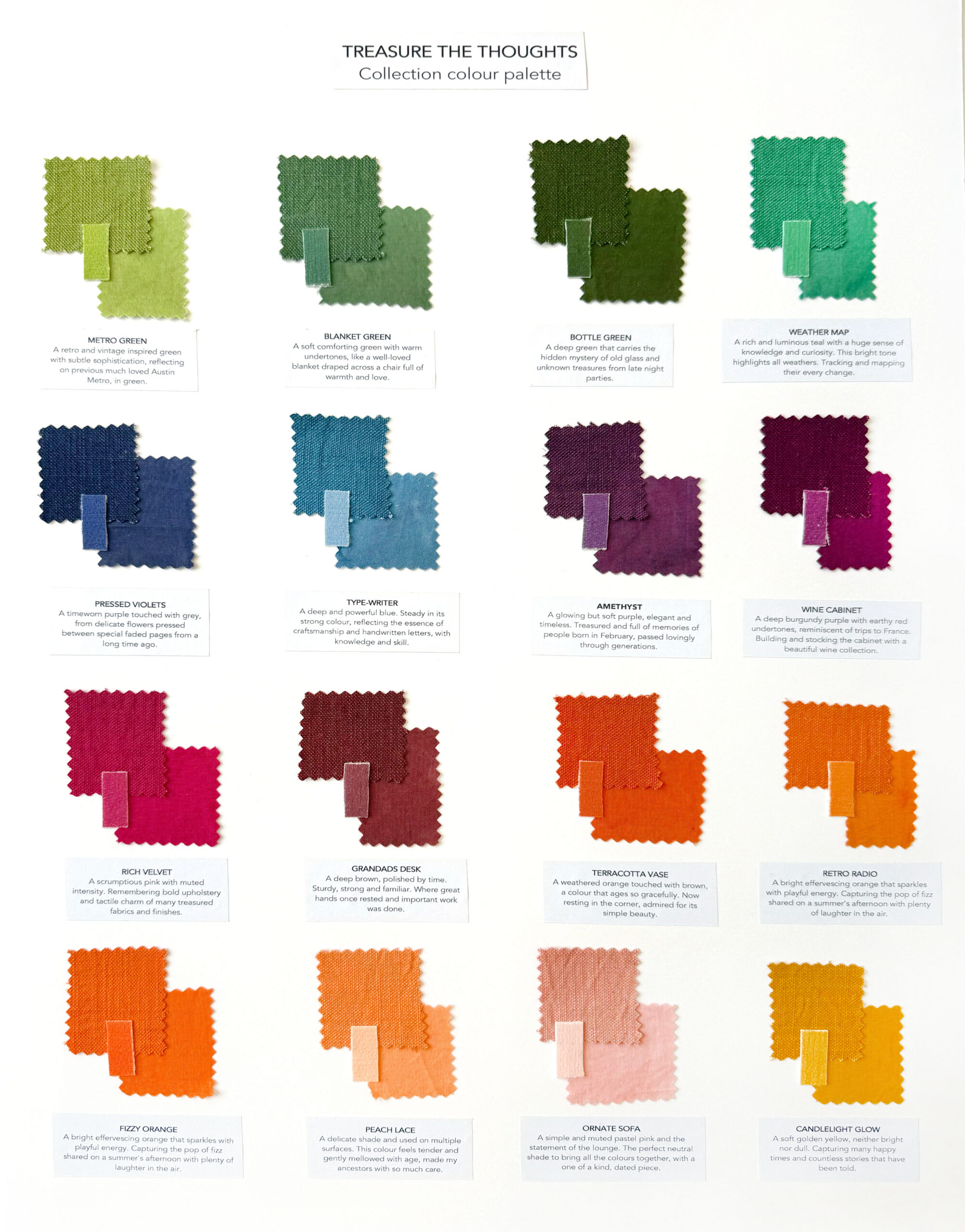
[IMAGE: Treasure the Thoughts collection colour palette, with names and meanings]
What role did digital textile printing play in bringing your designs to life, and how did it help you achieve the final outcome?
Digital printing played an important role in bringing my designs to life. It was important for me to demonstrate skills across both digital and traditional textile processes, showing how hand-drawn artwork can successfully transition between disciplines. Working digitally allowed me to explore a variety of repeat structures, including half-drop repeats, while refining scale, colour and composition.
Industry and innovation
What surprised you most about exhibiting at New Designers and sharing your work with industry professionals?
Each company was looking for something unique and had a very clear vision of what they wanted. It made me realise that success isn’t about creating work that appeals to everyone, but about finding the right people and brands who genuinely connect with your style and way of designing.
Personal touch
What did it mean to you to receive the Premier Digital Textiles Vibrancy in Print Award?
Colour and vibrancy within my design have always been at the heart of my work, so to be recognised by such an incredible company meant so much. I was also incredibly grateful for the opportunity to speak with the team and discuss the colour palettes, pattern and storytelling behind my collection. It was a really rewarding experience, and I’m excited to see where the opportunity leads next. It has really changed my life.

[IMAGE: Winner — Jessica Parker]
How has winning the award influenced your confidence, creative practice, or plans for the future?
Winning the award has had a huge impact on my confidence. It made me realise that my work is enough and helped me overcome a lot of the self-doubt I had before exhibiting. Being recognised in such a competitive industry showed me that there is a place for my work, and that gave me the confidence to keep pushing myself creatively. Since graduating, it’s motivated me even more to continue designing, developing new collections and pursuing opportunities within the textile industry.
Is there a brand, designer, or studio you’d love to collaborate with one day, and what draws you to them?
I’d love to work with heritage brands such as Sanderson and Liberty, or other studios that value traditional craftsmanship and storytelling. I’m drawn to the way they celebrate history, hand-drawn design and timeless patterns, creating collections with real character. It’s important to me to work in a creative environment that values hands-on design processes and original artwork, while embracing new technologies as tools to support, rather than replace, my own creativity.
Looking back, what advice would you give your final-year self — or other emerging textile designers preparing to enter the industry?
Looking back, I’d tell my final-year self not to be too precious about an initial starting design. The best ideas often come through experimentation, and the strongest work will come when you least expect it.
I’d also say not to compare yourself to others. As difficult as that can be when coming to the end of the degree, every designer has their own style, and that’s exactly what makes work valuable. The industry isn’t looking for everyone to create the same thing; it’s looking for individuality. Trust your creative instincts, keep developing your own voice, and the right opportunities will follow. I definitely learnt this at New Designers.
Looking ahead
Are there any techniques, materials, or themes you’re excited to explore in your future work?
I’m excited to keep creating, experimenting and pushing my work further. I’d love to work on a larger scale, continue combining hand-drawn techniques with digital processes, and explore new ways of applying my designs across different contexts. I’m particularly interested in creating for a wide range of industries, from interiors and fashion to lifestyle products, while continuing to develop my storytelling through colour and pattern.