Tag: circular design

  • ​​Q+A: Toby Lunn on Innovation in Action

    ​​Q+A: Toby Lunn on Innovation in Action

    Toby, for those who weren’t there, what was the TRAPIS & More Showcase all about?

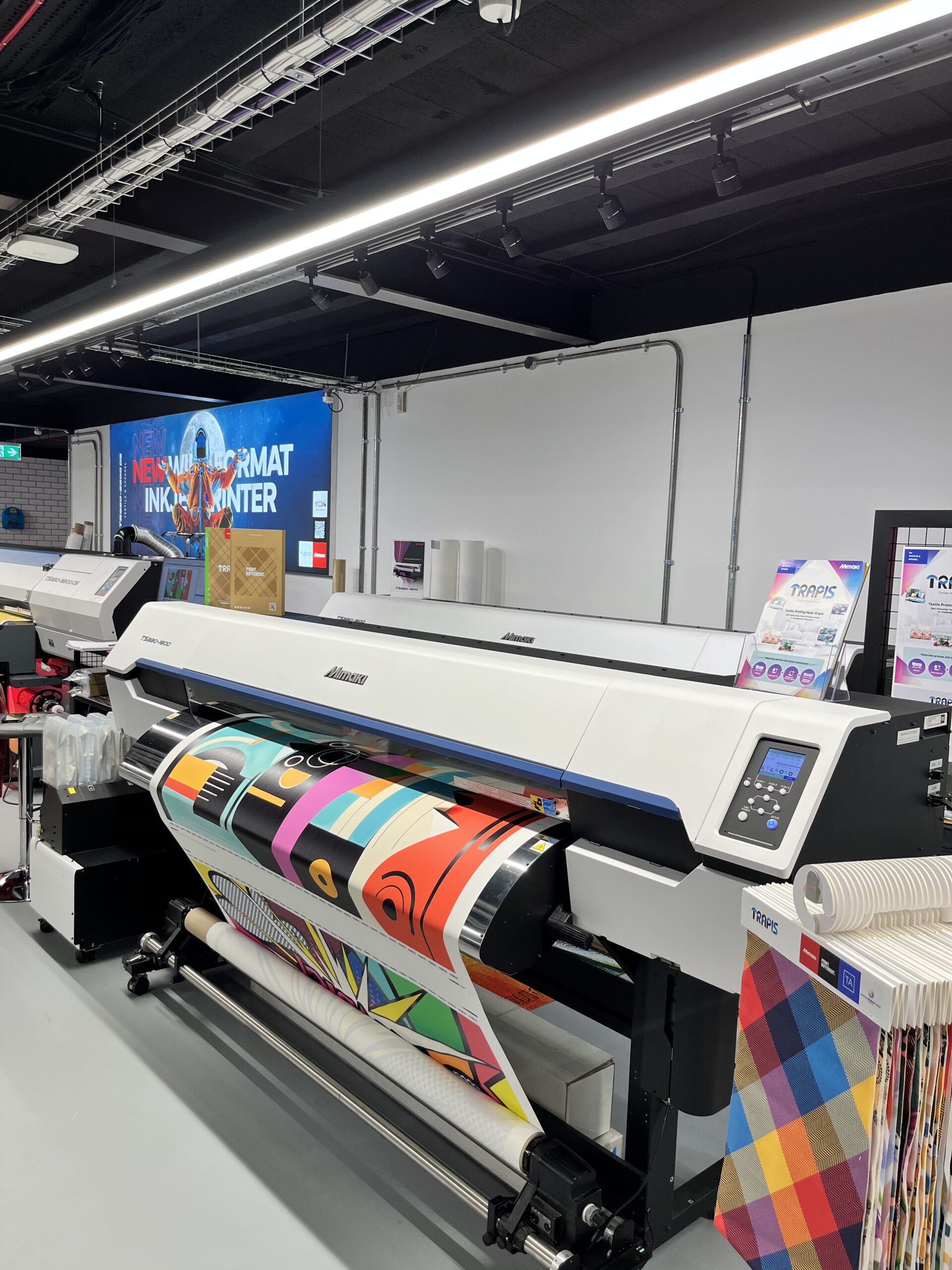
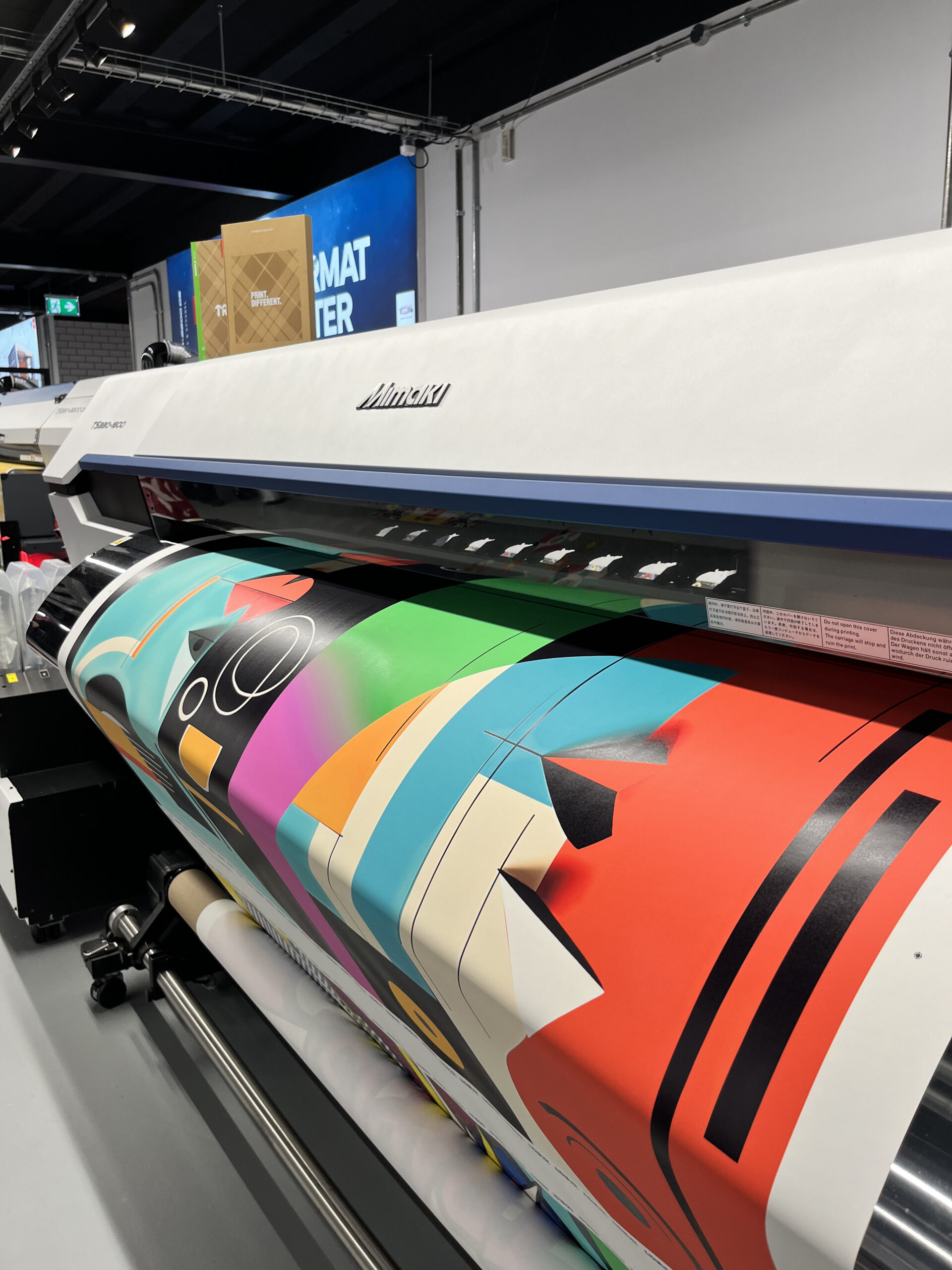
    The event brought together leaders from across print design, and manufacturing to explore where textile innovation is heading next. Mimaki’s showcase at Hybrid’s showroom in Crewe was about more than technology launches – it was a statement of intent. It showed how print technology, materials science and creative application are converging to redefine what’s possible in textiles.

    How did Premier Digital Textiles fit into the showcase?

    We are proud to collaborate closely with Hybrid Services and with Mimaki as a whole, supplying truly digitally prepared PrepRITE™ Fabrics that demonstrate the consistency, colour vibrancy and performance that modern digital print demands. It was a chance to show how fabric innovation underpins printer innovation. Every print result depends on the quality and stability of the substrate, and that’s where our expertise comes in.

    What stood out to you most from the event?

    The engagement in the new technologies and the quality of the product. You could really feel that the sector is moving beyond the ‘can digital compete?’ question. It’s now about how far digital can go and what kind of innovation will come next from the likes of Mimaki. From evolving pigment technologies to hybrid print systems designed for sustainability and speed, the showcase underlined how collaboration between OEMs, fabric suppliers and designers is driving real-world progress.

    Why is this partnership between Premier Digital Textiles and Mimaki/Hybrid significant?

    Because it demonstrates the power of joined-up innovation. Mimaki is at the forefront of print technology; we focus on optimised, sustainable fabric solutions. When you combine those strengths, you get print ecosystems that perform consistently, reduce waste, and accelerate production. It’s a partnership built around progress – not just promotion.

    How does sustainability fit into this conversation about innovation?

    Sustainability isn’t a feature anymore; it’s a baseline. The new generation of printers and fabrics are being designed with closed-loop thinking in mind, reduced water use, lower energy demand and recyclability. For us, it’s about helping printers and brands hit those targets without compromising colour, handle or performance. Furthermore you have the double benefit of the kind of innovation that creates solutions for all applications, whether that’s printers for a specific fibre type, or something more multi-faceted that covers a wide-range of options.

    What does this kind of collaboration mean for the future of UK digital textile printing?

    It shows that the UK can lead through partnership and precision. We’ve got the creative talent, the manufacturing capability and the appetite for sustainable innovation. Working with global OEMs like Mimaki and alongside key collaborators like Hybrid allows us to connect the component parts together and showcase what the UK textile industry can deliver on a world stage.

    Finally, how would you sum up your key takeaway from the October showcase?

    Innovation in textiles only matters if it reaches the customer – and that’s exactly what this event showed. From the lab to the production floor, collaboration is turning ideas into commercial reality. It’s exciting to see and Premier Digital Textiles will continue playing a leading role in making that happen.

  • Premier Conversations: Inkspin Founder Jilly Norton

    Premier Conversations: Inkspin Founder Jilly Norton

    Inkspin’s impact on the bespoke tailoring trade has been noted across the bespoke tailoring industry, with clients such as Lambton Tailoring & LGFG Fashion House who dress Jordan Peterson, Ozzy Osbourne and Tommy Fury to name but a few. We talk to the start-up’s founder Jilly Norton about Inkspin’s journey so far, what makes the company different, its successful partnership with Premier Digital Textiles and the importance of UK sourcing amidst Trump’s tariff war.


    Could you tell us a little about Inkspin Jilly, and your journey so far?

    Of course. Inkspin, a digital textile printing company for the bespoke tailoring trade, has been trading for two and a half years. The company is still new but we’re getting our name out there. Initially focusing on jacket linings with unique designs for celebrity clients, we soon expanded our services due to demand from bespoke tailors and garment manufacturers such as Lambton Tailoring. 

    Anyone looking to produce 500 suits off a manufacturing line with a standard lining won’t come to us because of the margins they work to. We’ll work with some of the tailors on Savile Row, who have incredibly wealthy clients who might want something like a Florida flag in the lining of one of their £5,000 bespoke suits. They like we’re UK-based, and that I can meet and talk to them directly.

    What makes Inkspin different?

    A few things really. Unlike other digital printing companies that simply print and supply, Inkspin collaborates closely with garment manufacturers and tailors to create and print designs that can be seamlessly integrated into the bespoke garment manufacturing process. This partnership approach ensures the final product looks fantastic and meets the high standards of made to measure and bespoke tailoring, where garments can be sold from £800 upwards. 

    The company’s designer understands what’s needed and is also an expert in made to measure garment manufacture. He ensures the printed designs are compatible with the specific garment’s pattern and the wearer’s unique measurements. Take someone like Eddie Hall for example. He won the 2017 World’s Strongest Man competition and is an LGFG fashion house customer. He’s quite a unique shape, and he’s quite different to some of their other well-known clients which include Jordan Peterson, Tommy Fury and Ozzy Osbourne. Put simply, our work must be bespoke.

    What led you to working with Premier Digital Textiles?

    Inkspin’s commitment to quality and customer satisfaction steered us to Premier Digital Textiles, who we reached out to discuss our fabric needs. We were particularly interested in fabrics that could withstand the rigors of bespoke tailoring while maintaining fantastic print quality and consistency.

    Through collaboration with Premier, Inkspin has been able to source high-quality fabrics suitable for a variety of garments, including jackets, trousers, shirts and waistcoats. Inkspin continues to work closely with both its customers and Premier to ensure the evolving needs of the bespoke tailoring trade customers are being met and that the best possible products and services are being provided. 

    Can you give an example of what you do for celebrity clients?

    Sure. LGFG’s client, Jordan Peterson, wanted a range of clothes for his recent tour. We worked in collaboration to turn their design ideas into reality to create bespoke printed fabrics suitable for their garment manufacturing. It’s important to mention here that we print in the UK and source our supplies from within the UK as well. This narrative is valuable to our customers. Toby Lunn of Premier has met Adam, my print technician, based in Leeds and they’re able to review the suitability of fabrics.

    How much does UK sourcing matter to Inkspin?

    Our UK base is a key differentiator against competitors who print in China and typically require larger order quantities. Our minimum order quantity is only one meter, which is a significant advantage, especially for customers who are used to a minimum order of 50 meters for a woven or dyed fabric. We offer design services and printing at our low minimum order quantity.

    It’s important to remember that the UK market is substantial. Partnering with Lambton in Leeds has been key to our success as not only are they brilliant MTM garment manufacturers, but I am able to utilise their customs expertise and dispatch services. I supply Lambton, and they handle customs and delivery for all my customers. This is crucial for efficient shipping. By eliminating fabric sourcing issues, I can focus on fulfilling customer orders quickly, thanks to our UK-based operation and proximity to Premier in the northwest of England.

    I’d imagine short turnaround times are commonplace for Inkspin?

    Very much so. Next day turnaround is critical for us which is why I don’t want to buy from abroad. I have other suppliers who offer their services, but then there’s customs, and it takes weeks. If something gets stuck in customs, there are major delivery problems.  A quick turnaround is critical.

    Annually, we have a big contract for the Caribbean Premier League. The fact that Premier can get me the materials I need in a short turnaround is really helpful because the customer will sometimes need more shirts and we have to meet the shipment date. 

    Being a UK based printer with a UK supplier makes a huge difference, and Premier being in Bury means they are not far from us. 

    How would you explain your working relationship with Premier’s Toby Lunn?

    It’s important that the relationship we have with Premier has always been beneficial. The ability to see the garments in person and discuss our needs with Toby is invaluable. Our orders may be small and bespoke, but the service we receive, first from Elen and now from Toby, has been excellent.

    When our print team were first testing Premier’s French Velvet, we were able to consult with Toby and find solutions to print challenges which included input from another one of Premier’s customers. This collaborative approach has been key. Toby’s understanding of our business and the garments we print allows him to suggest relevant products, like the Mesa, which was immediately popular with one of our retail customers.

    I also remember Toby and I trying to track down the Duchess Satin fabric before Christmas. Toby was brilliant because the fabric also had to be printed and shipped to the garment manufacturer in order to meet schedules. We ended up with about 150 meters, and I only needed 10. He was brilliant; we were constantly texting, asking where the driver was. That kind of thing is really important.

    Being able to communicate directly and quickly with Toby or Elen about urgent orders and having them respond promptly is crucial to our business. This partnership and the ability to work closely together is essential to our success. It means Inkspin can gain a significant advantage over competitors.

    Is quality control important to the final products?

    Very. We check the quality of Premier’s fabrics to ensure that nothing has been damaged during manufacturing. Because bespoke garments are made to your unique measurements, one of the important quality control checks is to remeasure the finished garment and compare it to the original measurements. This ensures that there has been no shrinkage or other changes. Premier’s fabrics have all passed this final quality control step with flying colours.

    At Inkspin we prefer natural fabrics because that’s what the bespoke tailoring trade and their customers want. We now print on a total of 13 fabrics, 12 of which come from Premier. The new Mesa fabric has been great, and we’ve been doing some test printing and sewing of some shirts. Those are just coming back to our garment manufacturer, because one particular client wants to order 25 of each shirt. 

    What’s happening now and next for Inkspin?

    The latest thing we did, which has gone down really well, is utilising Premier’s French Velvet, a stunning fabric that we use for jackets. People are absolutely loving that. So, we’re rolling that out with one of our customer’s brands called Etch, a custom suit platform, we have created five different velvet designs for their range. Now that clients in Scotland have seen all the samples, they want to do Black Watch tartan velvet dressing gowns for one of their hotel clients. The velvet has excited everybody, as has Premier’s Duchess Satin that we’re printing on for bespoke waistcoats. 

    Ultimately, we are a very niche company. And it’s really important to have a good relationship with Premier. They provide fantastic customer service and understand that we’re trying to build a business too.

  • “I made your fabric,” say Premier Digital Textiles

    “I made your fabric,” say Premier Digital Textiles

    To celebrate Fashion Revolution Week, Premier Digital Textiles outlines its commitment to ethical fashion

    Fashion Revolution Week encourages consumers to ask, ‘Who made my clothes?’

    At Premier Digital Textiles, we proudly respond: ‘I made your fabric’. And that’s because we believe fashion should be a force for good.

    Now in its 11th year Fashion Revolution Week started in the wake of the 2013 Rana Plaza disaster in Bangladesh.

    As a global movement it justly continues to raise awareness about the human rights and environmental impacts of the fashion and textile industry.

    Premier Digital Textiles, Europe’s leader in delivering high-quality fabric truly prepared for digital print, has long been an avid supporter – and contributor – of the need for transparency, fairness and sustainability in the fashion industry.

    Our commitment to change: How we’re contributing

    At Premier Digital Textiles, we believe fashion should be a force for good and are proud to share the actions we’re taking to build a more ethical and sustainable fashion and textile industry. The goal is to shift the fashion and textile industry towards practices that prioritise people and the environment over profits.

    1. Transparency in our supply chain
    We’re committed to transparency, ensuring that we know exactly where our fabric comes from. We collaborate closely with our mill partners to guarantee ethical production, fair wages and safe working conditions. Our mill partners meet social audit requirements including SA8000, Fair Trade, STeP by Oeko-Tex and GOTS.

    2. Sustainable materials and practices
    We’re reducing our environmental footprint by using eco-friendly materials like organic cotton, recycled cotton and recycled polyester. Our mill partners’ strategic actions in renewable energy, emission reduction, water conservation, recycling and circularity underline this.

    3. Supporting fair labour practices
    Fair wages and safe working conditions are at the heart of our mission. We partner with suppliers who uphold labour rights and are dedicated to improving the lives of their workers. Our mill partners go beyond the basics, offering equal opportunities supporting community welfare programmes and providing benefits such as subsidised education, free accommodation, transport and medical check-ups.

    4. Ethical design and production
    We focus on creating durable cloth that stands the test of time. By designing for longevity, we reduce overconsumption and encourage customers to invest in quality.

    As part of our commitment to these values, we work alongside global mill partners and maintain close working relationships with UK weavers and finishers who share our same values.

    Global mill partners: Our Head of Supply Chain Sarah Marlow reflects on “invaluable” visits

    As part of our commitment to improving the way we work with our mill partners, our Head of Supply Chain, Sarah Marlow, recently undertook trips to meet with some of them.

    These trips were an invaluable part of our ongoing mission to ensure ethical and sustainable practices across our supply chain.

    Reflecting on her travels in 2024, Sarah shared her insights and the importance of building and renewing relationships with global mill partners.

    She said: “The primary goal of my visits was to understand the complexities of the production process and the importance of building strong relationships with our suppliers.

    “I walked through the entire production journey, from fibre cleaning to final packing. It was a valuable opportunity to gain insights into quality control and international compliance.”

    Sarah’s visits included both a small, specialised mill and a larger producer with over 10,000 employees.

    These visits highlighted the importance of nurturing personal relationships with suppliers, ensuring shared commitment to ethical practices and quality standards.

    Sarah added: “Regular updates and TEAMS meetings with our mill partners allow us to stay aligned on goals and continually improve. As we plan additional visits in 2025, I’m excited for the new perspectives and insights these will bring. I look forward to the ongoing updates and new insights we will gain through our regular meetings and planned visits in 2025”

    These visits underscore the importance of staying connected with our supply chain partners and continuously seeking new ways to enhance our practices. They are a key part of our ongoing commitment to sustainability, transparency and ethical production.

    ‘It’s left a positive lasting impression,’ says Business Development Manager Grainne Brennan following a trip to India

    Grainne Brennan recently returned from a visit to India, where she had the opportunity to spend time with one of Premier Digital Textiles’ key mill partners.

    The trip, she says, proved invaluable both professionally and personally.

    “This visit brought a new level of understanding and collaboration to our partnership,” Grainne shared. “As someone who works closely with the team every day, meeting them in person helped to strengthen that relationship in a really important way.”

    During her time on the ground, Grainne was able to witness the full manufacturing journey, an experience that deepened her appreciation of the process.

    “I gained insight into everything from spinning the yarn to weaving and finishing the final fabrics. It really helped me understand just how much is involved at every stage.”

    One standout moment for her was seeing the fabric finishing process in action.

    “I’ve visited our UK-based finishers before, so I had some foundational knowledge going in,” she explained, “but seeing how the process is done in India added a whole new dimension. It was fascinating.”

    What left a lasting impression on Grainne was the mill’s strong commitment to sustainability and ethical practices.

    “Their investments in zero-discharge water treatment, afforestation projects and renewable energy really spoke to their forward-thinking approach,” she noted. “But what struck me most was their social focus – especially their efforts around women’s empowerment. Women make up 50% of the workforce, which is something truly inspiring to see in action.”

    Reflecting on the experience, Grainne said: “This trip gave me far more than just insights into the manufacturing process – it gave me a deeper understanding of who we’re working with and reaffirmed why this partnership matters so much.”

    UK partners

    In addition to our global mill partners, we maintain close working partnerships with UK weavers and finishers. It enables us to build strong hands-on relationships.

    The ability to visit regularly allows us to ensure that production is carried out ethically, with fair labour practices in place. It gives us greater transparency across our supply chain, and it’s encouraging to see our partners continually striving to improve and meet ambitious sustainability targets.

    The future of fashion: What’s next?

    During this journey toward a more sustainable and ethical fashion and textile industry, we rightly recognise that change takes time.

    At Premier Digital Textiles we are deeply committed to contributing to a fashion and textile industry that is fair, sustainable and respects people and the planet.

    So join us in the revolution

    During Fashion Revolution Week 2025, we encourage you to ask, ‘Who made my clothes?’

    Whether you’re purchasing fabric with us or another company, your choices matter.

    By supporting ethical brands and demanding greater transparency, you help create a future that’s better for planet earth and its people.

    At Premier Digital Textiles Ltd, we’re proud to be part of the solution.

    Together we can revolutionise the fashion and textile industry – one conscious choice at a time.

    Author: Elen Hughes, Premier Digital Textiles

  • Sustainability & Responsible Fabric Sourcing

    Sustainability & Responsible Fabric Sourcing

    In a world where the Textile Industry is seen to be one of the largest polluters of the environment, progress towards achieving sustainability in Textile manufacturing has proved to be a vital component in developing a winning market proposition for many textile Companies.

    Whether it is the use of illegal pesticides in cotton growth, or the irresponsible consumption of trees and oil reserves in fibre production, the Textile Industry has much to answer for, but it is changing, and fast.

    Taken alongside its voracious appetite for energy and water consumption, as well as its unrestrained pollution of local water tables, the Textile Industry has been forced to find answers for an increasingly environmentally aware customer base.

    Alongside the many improvements in bleaching and chemical treatment, as well as new re-cycling technologies, the widespread adoption of Digital Textile Printing has proved to be a vital component in the Industry’s battle to adopt effective sustainability strategies.

    Over the years, Digital Textile Printing has become the most effective sustainable solution in textile production.

    The machinery is smaller, less space consuming, and ink usage is a fraction of traditional analogue printing processes.

    A typical Digital print installation will use less than 25% of the Electricity, 10% of the water and less than 5% of the water table pollution of traditional printing processes.

    All of which adds up to a tremendous reduction in the environmental footprint of Textile printing.

    Yet behind the machinery and process choice lies the extensive use of certified inks, that through the various bodies such as Oeko-Tex, Reach and BlueSign reach acceptable standards of environmental safety.

    Many of the inks used in Digital printing are 100% Non-hazardous, 100% Toxin-free, Biodegradable, contain no animal by-products, and are safe for infants and babies.

    Inks generally meet the strictest industry standards as defined by Oeko-Tex 100 safety applications for infant wear, Global Organic Textiles (GOTS-3V), Residues Standard List (RSL) and the American Association of Textile Chemists and Colourists.

    Supporting this is the responsible sourcing of fabrics:

    The Digital Printer in his quest for environmental credentials also has to use fabrics that are prepared from renewable, re-cycled or organic sources.

    Premier Digital textile are market leaders in this sector with a wide range of responsible fabrics including Bamboos, Linens, recycled Polyesters and GOTS certified cottons.

    Sustainability is at the heart of the Premier Digital Textile supply chain and they provide eco-conscious certified cotton and recycled polyester alternatives.

    Premier Digital Textiles support and supply Sustainable textiles with a reduced carbon footprint, prepared using less water than conventional textiles and with reduced or no use of pesticides and growing agents. They now also offer an expanding selection of re-cycled polyester print bases.

    Whatever the print process, Premier Digital textile have an environmentally conscious fabric for the Digital printer to choose.

    As a company renowned for their innovation the sustainable sourcing team and textile innovators at Premier Digital Textiles continue their development of circular, eco-friendly fabrics.

    So, with responsible fabric sourcing, water and energy efficiency, zero wastewater, and fully certified inks, Digital Textile Printing continuously shows the way forward in the environmentally sensitive market of today, offering a High-Tech solution to redress the many ecological excesses of the past.